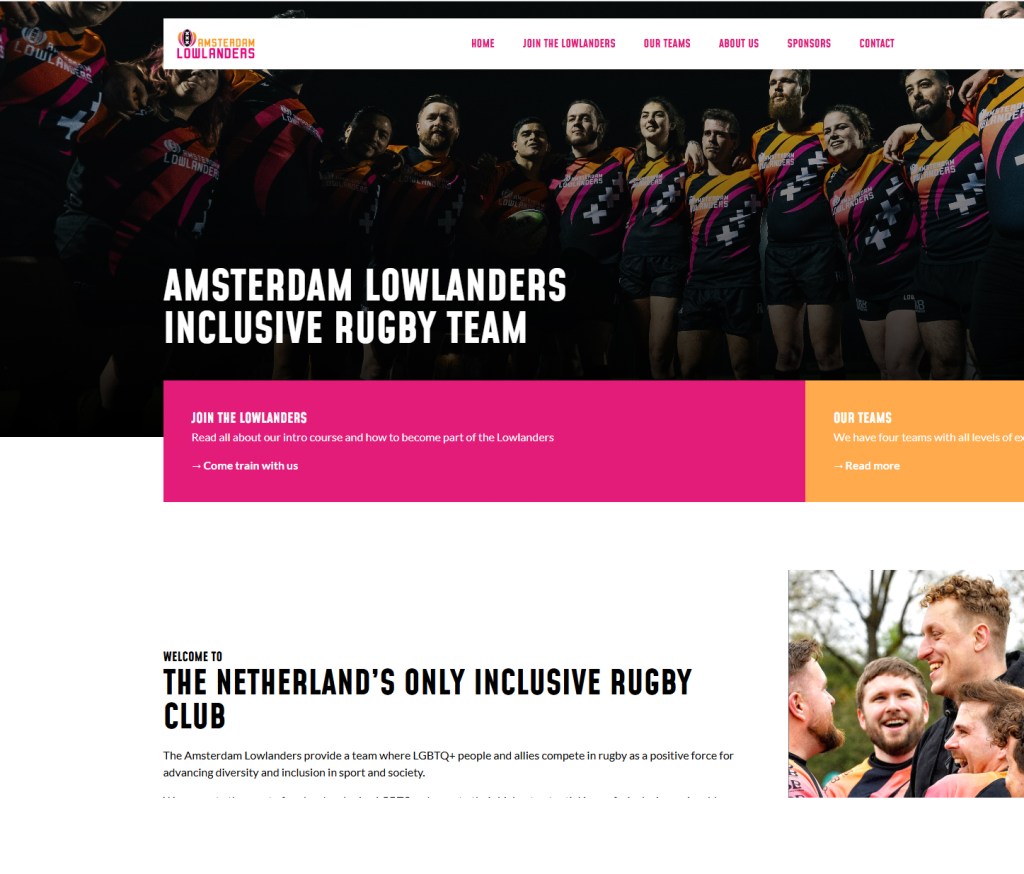
There is in Nederland a transgender LGBTQ+ community who want to play rugby. Lowlanders Aqua in Amstelveen is made up of people who identify as women and non-binary people who compete in the women’s division, comprising players from across the Netherlands. They compete nationally against other LGBTQ+ teams and internationally at the 1st division level, accommodating players of different skill levels.
They provide an environment in which persons of various genders, sexual orientations, ethnicities, and socioeconomic backgrounds can feel comfortable about themselves while participating in rugby. They also collaborate with other LGBTQ+ sports organisations, sports organisations, and Rugby Netherlands to advance diversity and inclusion in sport and society.
‘It’s not about the body but what the body can do’
Everyone should be able to play the sport they love, no matter how they identify. That’s not what I am writing about, I am merely talking about what people’s bodies can do. Identifying as something different that your born sex is a social construct, but what you can do with the body you are born with, is science.
Male puberty is the point at which boys really open the physical gap on girls. To 10 years old, testosterone levels in boys and girls are broadly similar. At puberty, male testosterone levels surge and stabilise at around 20 times higher than in females. This surge shapes a boy into a man, and into a superior athlete.
Males are five inches taller than females. Longer arms give a greater reach and can generate more speed on a cricket ball. Bigger hand spans can more easily palm basketballs. Longer legs and narrower pelvises lead to better running gaits. Males need fewer strides to cross a distance and the strides they take are more efficient
From what the science says and what I have experienced, trans women’s bodies are stronger than cis women. This is why I think it’s good, great even that there are teams around the world who make space for transgenders to play rugby. It allows trans women to play without there being concern about safety and fairness in the game.
When I say trans women should be excluded from the women’s league, I’m not saying they should be excluded from rugby. I’m saying because of fairness and safety of what their bodies can do they should have their own teams, leagues, divisions, trainings, etc. and I would even argue that the Dutch Rugby Association should help them get a bigger audience and players.
The Dutch Rugby Association has said they put inclusivity on top but this is a way to also care for women’s safety.
This allows safe and welcoming environments for all parties; women don’t have to be scared of the strengths difference and bigger chances of injury, and trans women don’t have to worry about being included/excluded or being (verbally) mistreated.


 Womens Safety in Rugby
Leave a reply to CJ Cancel reply